How Authoritarian Tactics and Information Manipulation Threaten Free Societies
DemocracyInPeril Authoritarianism GlobalPolitics CivicAction RuleOfLaw DemocraticBacksliding

Experts worldwide are alarmed at the accelerating drift toward authoritarianism emerging across dozens of countries, including established democracies like the United States and India.
The Global Democratic Recession:
The International Institute for Democracy and Electoral Assistance (IDEA) reported in September 2025 that this marks the ninth consecutive year of democratic regression globally. Over half of the 173 countries studied show declines in representation, rights, and the rule of law. The U.S. and India were specifically cited for weakened institutional checks and erosion of trust in elections.
In the U.S., the slide is particularly sharp. A Bright Line Watch survey of political scientists in early 2025 found the nation’s democracy rating had fallen from 67 to 55 (out of 100) after Donald Trump’s reelection—the steepest drop since 2017.
Researchers cite the expansion of executive power, retaliation against rivals, and interference with courts and the media as hallmarks of this decline. Civil-society monitors identify this as the "autocrat’s playbook": normalizing lawbreaking, purging critics, and using state agencies for partisan ends to consolidate power under a legitimate façade.
Also, and importantly, Social media’s role in fostering misinformation, conspiracy theories, lies, fake news, anger and fear acts as a key enabler of the bullying, authoritarian dynamics seen in modern politics.
Another example of this norm erosion is the use of tariffs. Many analysts argue that Donald Trump's use of tariffs has acted as an authoritarian-style power tool, justified under vague claims of “national security.” This use of economic intimidation, often bypassing congressional oversight by invoking emergency powers, resembles a governing style that rewards loyalty and punishes disloyalty, transforming trade policy into an instrument of executive overreach.
The Vulnerability to Strong Leaders:
The autocrat's success relies partly on public susceptibility. Pew and PRRI surveys (2024–2025) found roughly 40 percent of U.S. adults express a craving for a "strong leader" who bypasses political compromise.
This desire is fueled by deep-seated fear, resentment, or mistrust of institutions, which social media algorithms aggressively amplify. Feeling overwhelmed, many citizens withdraw rather than resist.
Globally, democracy is being captured from within through "Competitive Authoritarianism." Rulers in countries like Hungary, Turkey, and Russia preserve the appearance of elections while systematically hollowing out the independence of courts, media, and civil society. These modern autocrats are masters of propaganda and "emotional management," cultivating support through nationalism and fear while repressing dissent just enough to maintain control.
The Power of Public Resistance:
Autocratic systems built on fear, rather than consent, tend to implode violently. Historically, figures like Saddam Hussein (executed in 2006) and Muammar Gaddafi (killed in 2011) met brutal downfalls when their legitimacy finally broke. Modern strongmen adapt by using disinformation and polarization, but their power still collapses the moment people lose their fear and reclaim agency.
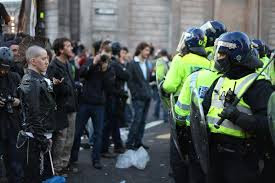
Widespread public dissent, such as the "No Kings" demonstrations in U.S. cities, is a powerful antidote. Democratic backsliding can be reversed when societies combine:
1. Civic Persistence
2. Legal Accountability
3. Credible Elections
While the world is in a democratic recession, widespread public dissent and awareness remain the most effective defence against the bullying style of politics.
SNP
Comment below, what’s your take? Like and repost.
How do you think the average citizen can best counter the tactics of the "autocrat's playbook" in their daily life?


Comments
Post a Comment